There have been many changes given the fact that construction and engineering industries are sensitive to any change that occurs, particularly in BIM. Structural BIM services have become one of the most essential service lines in contemporary construction, as they offer ways in which projects are enacted.
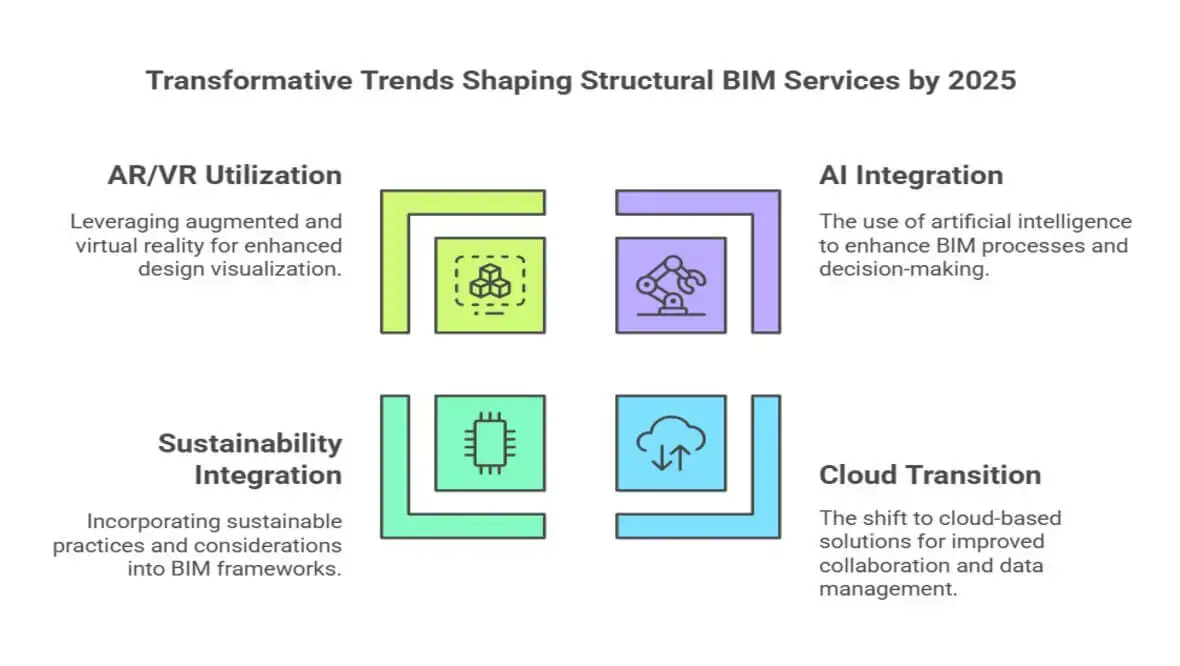
In this blog, three core themes, influencing the directions of implementation of structural BIM services by 2025 and beyond, have been discussed. We will focus on how AI is being implemented, how the move to the cloud is changing the BIM process, how sustainability is being folded into BIM processes, and how augmented and virtual reality is being used for design visualization. All of these trends indicate the fact that BIM is a constantly changing technology with a great ability to improve the construction process.
AI-Driven BIM for Enhanced Efficiency
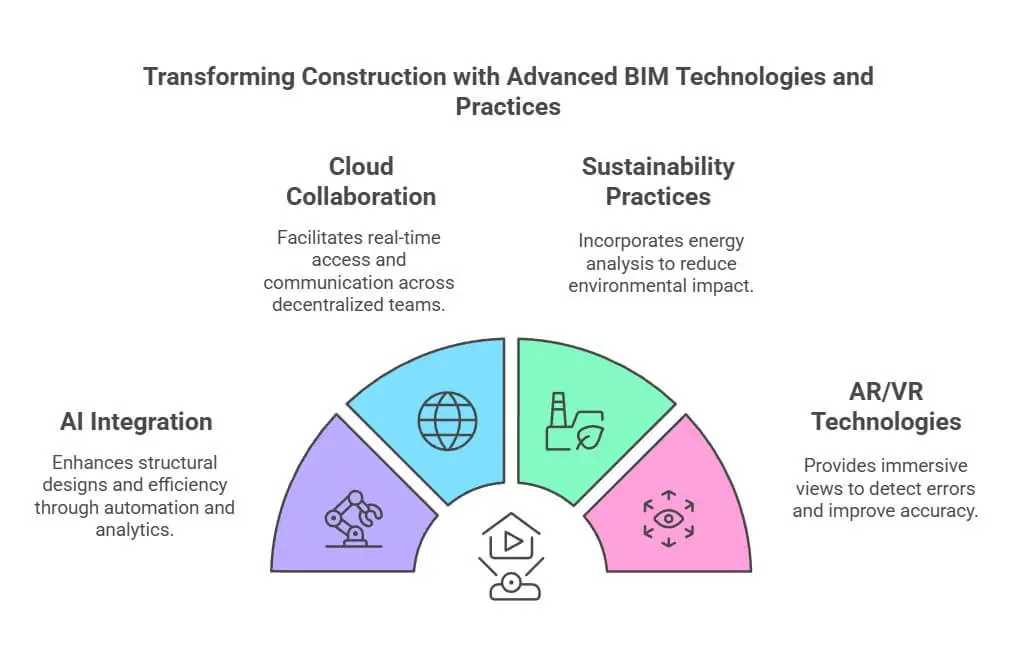
Integrated structural BIM services are gradually incorporating the use of A.I. technology to help boost automation, analytical, and informatics solutions to structural designs. In engineering designs, artificial intelligence enables architects and engineers to improve structural designs, detect hazards, and perform different possible scenarios in designing and developing a project to achieve durability and efficiency.
Real-time analytics and predictive modeling with the help of artificial intelligence are also reshaping the way experts come up with their maintenance planning and lifecycle management. These advances make a project more efficient, faster, and cheaper while enhancing the standard of construction in general.
Cloud-Based Collaboration: Breaking Geographical Barriers
With sophisticated projects and cross-functional and cross-continental teams nowadays, cloud collaboration tools are an essential must-have. Integrated BIM systems with cloud solutions provide real-time access to models, drawings, and other project-related information thus making communication an easy process.
This trend eliminates how everyone works in isolation thus creating the new workflow that all the parties can work on the same platform. The constant rise of remote work means that cloud-based BIM systems remain the only solution for keeping projects consistent even with decentralized teams.
Sustainability in BIM: Building for a Greener Future
Sustainability is no longer a hype but a reality in construction projects. Structural BIM services are now widely at the forefront of embracing environmentally sustainable systems in the construction of buildings. When such tools for carrying out energy analysis and carbon footprint are included in BIM models, designers can come up with informed decisions to lower the negative impact on the environment. This is in line with sustainable construction practices across the world whereby engineers and architects can design structures that can be energy efficient, made of sustainable products, and with minimal wastage of resources during construction.
Augmented and Virtual Reality in BIM Workflows
AR and VR in particular are becoming the game changers in how professionals engage with BIM models. These technologies provide stakeholders with a three-dimensional view of a building’s construction before it is put up.
Most importantly, they are very helpful when it comes to pointing out design errors, explaining the project to the clients, and increasing the accuracy of construction on sites. With these tools becoming more prevalent and inexpensive, their incorporation into structural BIM services as part of the design and construction will also progress, which brings design and building processes closer to being seamless.
Conclusion
Technological advancement and sustainability are the trends that shape the future of structural building information modeling services. The construction industry is experiencing new developments in the ways of utilizing advanced tools such as AI, cloud-based solutions, sustainable components, and extended reality technologies like AR and VR. The expansion of these trends in 2025 and beyond will bring the emergence of intellectual, environmentally sustainable, and efficient construction practices as benchmarks to the built environment.
Leading BIM services provider. Adding Innovation and Excellence to the BIM Services.