
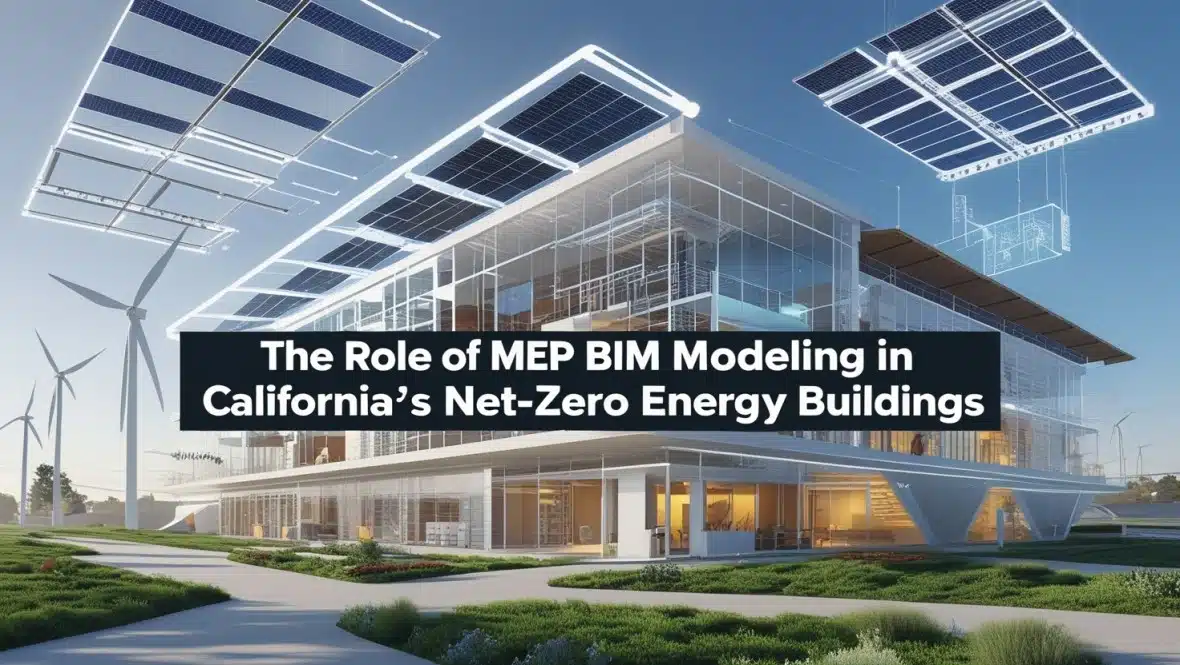
California stands at the forefront of sustainable construction by striving to achieve net-zero energy status in residential buildings by 2025 and commercial buildings by 2030. The accomplishment of sustainable targets in California depends heavily on MEP BIM modeling because this approach helps design teams produce structures that satisfy environmental requirements.
Advanced modeling techniques enable BIM service providers to optimise mechanical electrical plumbing (MEP) systems together with energy conservation features, renewable energy systems and operational efficiency improvements. Scan to BIM services allow modifications to existing buildings, which transform them into net-zero structures thereby lowering universal energy utilisation.
This blog explores how MEP BIM modeling in California is driving the future of sustainable building design and making net-zero energy buildings a reality.


Optimising Energy Efficiency with MEP BIM Modeling
1. Smart HVAC System Design The installation of heating, ventilation, and air conditioning systems within buildings becomes responsible for major sections of total facility energy use. The architects employ services like MEP BIM modeling in California that model various HVAC systems which helps them discover efficient operational solutions. The MEP BIM modeling technique helps decrease energy waste while boosting indoor air quality through its optimization of airflow together with insulation and heat recovery features. 2. Renewable Energy Integration A building must produce the same amount of energy as it requires to reach a net-zero energy status. Therefore, BIM service providers incorporate renewable energy features such as solar panels, geothermal heating, and wind turbines through the seamless implementation of MEP BIM models. The models enable optimal control over power generation storage and distribution thus maintaining self-sustainability for the buildings. 3. Lighting and Electrical System Efficiency A properly designed lighting system holds important significance for energy savings efforts. Through MEP BIM modeling in California, architects have the power to design lighting systems that adjust automatically to occupant levels while utilising available natural light thus decreasing electricity usage. 4. Water Conservation through Advanced Plumbing Design Sustainable buildings depend heavily on water efficiency standards. The application of BIM enables plumbers to develop water conservation designs by integrating methods of greywater recycling alongside rainwater harvesting technology with low-flow fixture systems. 5. Performance Simulation and Data-Driven Optimisation Energy simulations based on MEP BIM modeling in California help determine the heat loss, airflow and power consumption before actual construction starts. Engineers use the gathered information to enhance design energy efficiency and minimise operational expenditures. 6. Thermal Comfort and Passive Design Strategies Net-zero buildings work to keep buildings thermally comfortable using minimal active systems. BIM provides architects with design tools helping them build passive features that lessen their dependency on ventilation systems and heating and cooling technology. 7. Smart Building Automation and Energy Monitoring Integration of smart building automation systems with the help of BIM platforms improves monitoring and control of building energy. Automated sensors, IoT devices and AI-driven analytics enable real-time energy regulation that optimises building operations while fighting energy loss.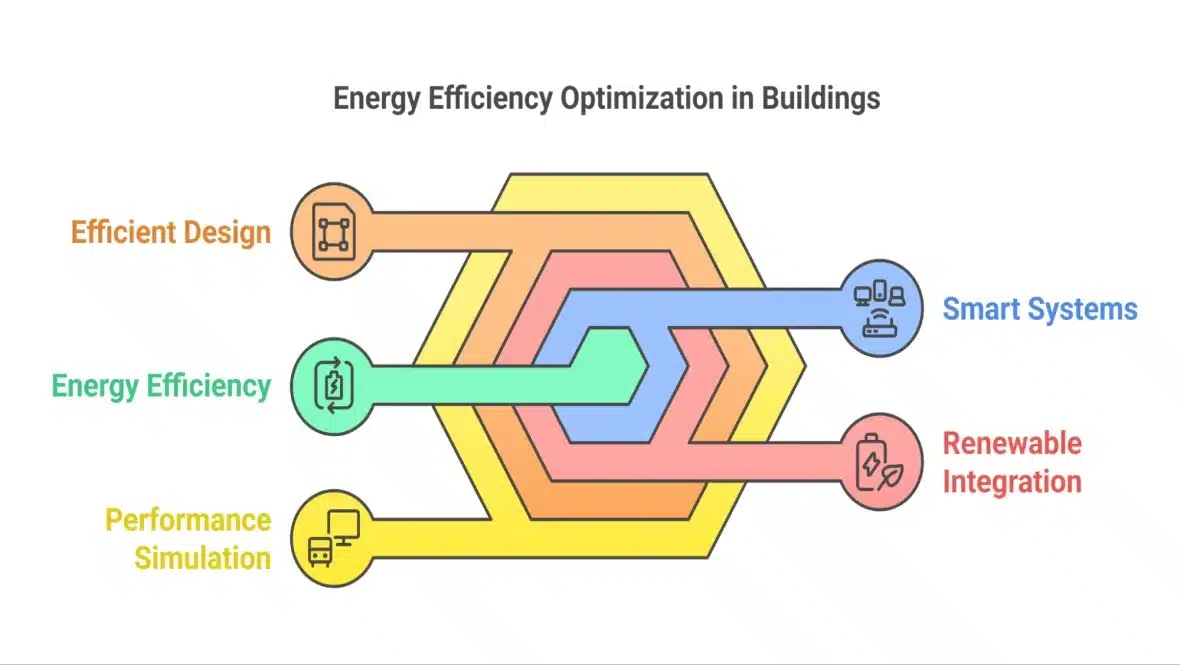
Upgrading Existing Buildings with Scan to BIM Services
California uses Net-zero energy standards to modernise both new construction and renovation projects for existing buildings to raise energy efficiency standards. The digital representation created by Scan to BIM services helps engineers understand building inefficiencies to design sustainable upgrades. Using Scan to BIM services, engineers can identify opportunities to modernise heating, ventilation, air conditioning equipment, insulation and electrical wiring, which enables structural retrofits toward sustainable and energy-efficient buildings. Developers who partner with experts in BIM service gain the better capability to select retrofits that fulfil California’s sustainable requirements.Conclusion
The transition of California toward net-zero energy buildings will require MEP BIM modeling as a crucial element to achieve maximum energy efficiency with renewable solutions integration. BIM technology delivers energy-efficient buildings through accurate simulations and innovative design approaches alongside sophisticated analytics tools for reaching optimum performance. Decision-makers in architecture and engineering benefit from Scan to BIM service providers to produce sustainable buildings, meeting the needs of cost requirements and regulation standards. California’s built environment will migrate toward a sustainable direction where MEP BIM modeling serves as the cardinal design element. Want to integrate MEP BIM solutions into your next project? Contact us today to explore how we can help you achieve your sustainability goals.
Leading BIM services provider. Adding Innovation and Excellence to the BIM Services.