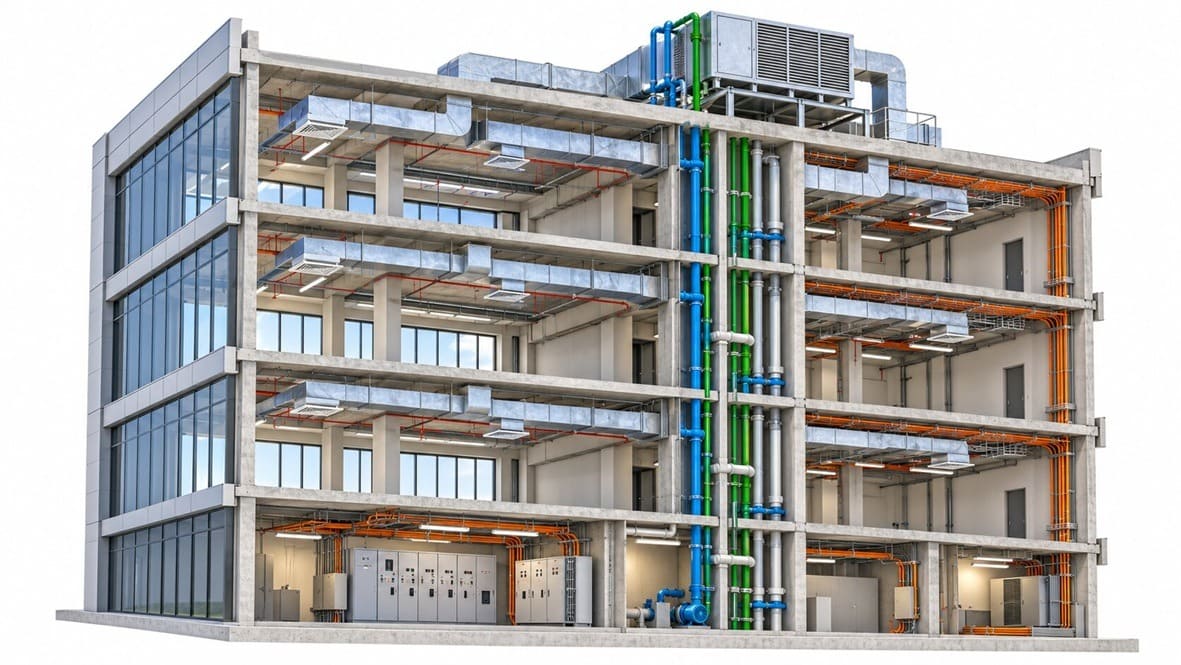
The construction and infrastructure industry is in the middle of a technological revolution with BIM at the forefront. BIM is already changing how projects are delivered, and the market around it is forecast to keep growing through 2030. In this blog, we will analyze the market size, share, and opportunities of BIM and discuss how this technology will be deeper in the years to come.
The Evolution of BIM Technology
In recent years, BIM has evolved from a design tool to an important tool in the Architecture Engineering and Construction (AEC) sector. The next big advancements in BIM technology are seen in its capability to use real-time information, AI solutions, and cloud-based working platforms to allow smooth working with all stakeholders.
Market Size and Projections
According to MarketsandMarkets, the global BIM market is valued at USD 9.03 billion in 2025 and is projected to reach USD 15.42 billion by 2030, a compound annual growth rate of 11.3%. The report names global urbanization, infrastructure development and the need for real-time collaboration as the main growth drivers.
Key Drivers of Market Growth
- Some of the advanced digital twin applications that have emerged and have remained relevant to lifecycle management have been identified in this study.
- Higher usage of 5D BIM to reduce costs and time.
- Integrating with IoT to develop real-time monitoring and assessment for maintaining the machines.
- Government policies that will encourage the use of BIM in civil works.
Challenges to Overcome
Even though BIM technology’s future looks very promising, several issues affect its usage now, like high initial cost, shortage of qualified personnel, and problems with data exchange. To address these challenges, the industry will need to work together to invest in training and development and innovate.
Regional Growth Analysis
North America is the largest regional market, at USD 3.05 billion in 2025 and a projected USD 5.17 billion by 2030. Asia Pacific is projected to grow at the highest rate over the same period, supported by heavy investment in infrastructure and smart city projects.
BIM Market by Segment
Below is how the market breaks down by segment:
- By vertical: Buildings lead in adoption, while civil infrastructure shows the highest growth rate.
- By project lifecycle: The construction phase is expected to grow fastest, driven by real-time coordination, scheduling and cost management.
- By offering: Software remains the core of the market for design, visualization, clash detection and coordination. Services for implementation, training and lifecycle support are growing quickly.
- By deployment: On-premises still leads because of data security and local compliance needs. Cloud adoption is accelerating for scalability and remote collaboration.
- By end user: AEC professionals lead adoption.
The Role of Technology in BIM’s Future
New technologies will revolutionize the future of BIM technology, including Artificial Intelligence, Machine Learning, and Augmented Reality. These will improve data visualization capabilities, increase automation, and enhance decision-making, solidifying BIM as the building information model of the modern construction industry.
Bottom Line
With the market forecast to grow by more than 11% a year through 2030, technology adoption in the AEC industry is set to stay a key area of improvement. The growing size of the BIM market proves that the technology, including BIM Outsourcing Services, is useful for addressing construction issues and establishing new standards. These improvements have to be adopted by the stakeholders to remain relevant within the marketplace and address the new requirements. Thus, the future of BIM is not in constructing better buildings but in crafting a future of a Smart Building Information Modeling World.
Leading BIM services provider. Adding Innovation and Excellence to the BIM Services.