The Future of Construction Industry is on the brink of transformation, as new technologies and new working practices reshape the sector. The trends for 2026 to 2028 center on advanced tools that improve efficiency, sustainability, and safety. All these trends have the potential to alter the usual construction processes and result in smarter, faster, and more robust construction. With the help of this blog below, let us take a closer look at these top 11 trends that will define this change.
The Virtual Construction Market Sees Rapid Growth
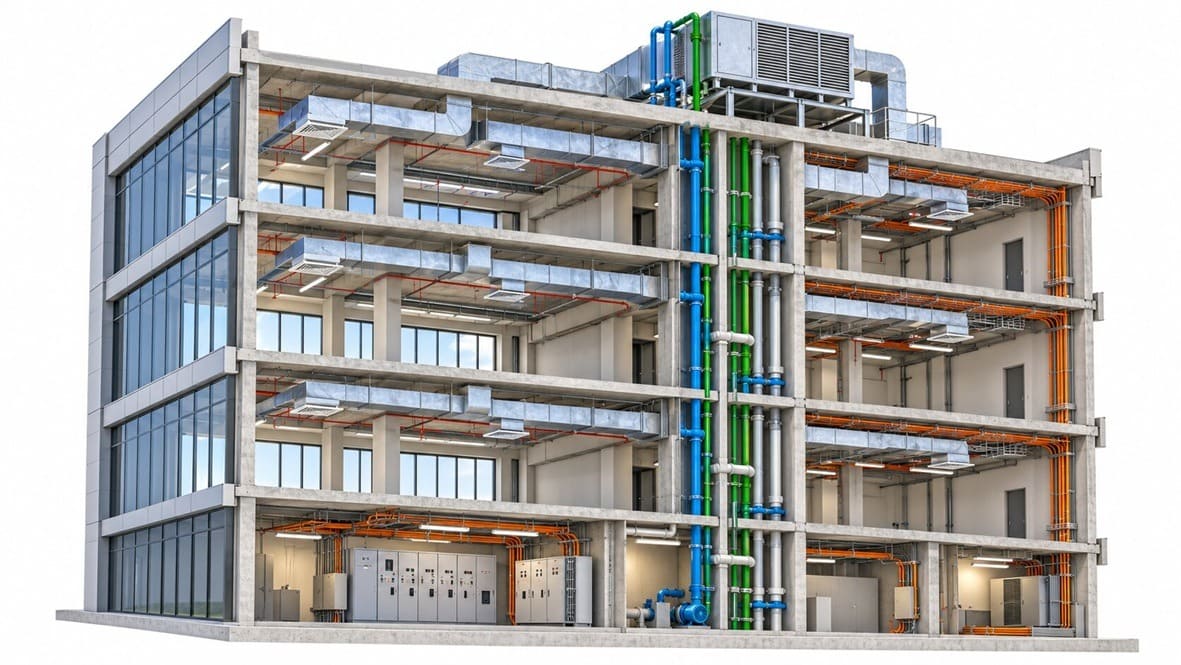
Digital technology has driven strong growth in virtual construction. Teams now build a project digitally before breaking ground, using BIM models to test sequencing, find clashes and confirm quantities. This lets projects be delivered more efficiently and accurately, with fewer surprises on site.
Prefabrication and Modular Construction Change How Structures are Built
Prefabrication and modular construction are changing how structures are built by moving work into controlled factory settings. Components arrive ready to assemble, which shortens schedules and reduces waste. Accurate BIM models are what make this possible, since every module has to fit the first time.
Smart Cities Change the Way Construction Companies Operate
Smart cities push construction firms toward a more connected way of building. Projects must now account for sensors, data networks and integrated utilities from the design stage. BIM and GIS data together help teams plan this infrastructure at city scale.
Green Building Helps Tackle Environmental Issues
Sustainability is a critical factor in the future of the construction industry. Energy codes are tightening, and owners increasingly ask for lower operating costs and lower carbon. Sustainable materials, efficient systems and energy modeling within BIM help projects meet these targets.
Living Building Materials Go Mainstream
Living building materials are an emerging trend to watch. These include self-healing concrete and bio-based bricks designed to repair small cracks or reduce embodied carbon. Most are still at pilot or early commercial stage, but they point to where material science is heading.
The Future of Construction Industry Benefits Heavily from Drone Technology
Drones now play an important role on construction sites as cost-saving equipment. They capture survey data, track progress and inspect areas that are unsafe to reach. The data feeds directly into Scan to BIM workflows to keep models aligned with site conditions.
Tech Solutions Improve Safety
Job site safety remains an ongoing concern, and technology plays a central role in improving it. Wearable sensors, site cameras and 4D BIM simulations help teams spot hazards before work begins and respond faster when conditions change.
Increased Use of BIM Software for Project Planning and Management
BIM software was once optional and is now standard practice in architectural and construction planning. The newest releases add AI assistants that work directly with live model data, which speeds up routine documentation and coordination tasks.
Construction Firms Face Major Labor Shortage
The labor shortage remains one of the industry’s biggest challenges. Associated Builders and Contractors estimates the US industry must attract 349,000 new workers in 2026 and 456,000 in 2027, with most of the 2026 demand coming from retirements. Firms are responding with training, outsourcing and technology that lets smaller teams do more.
Data center construction is one of the strongest sources of demand. US Census Bureau figures show data center construction spending passed an annualized USD 50 billion for the first time in April 2026. These projects are MEP-heavy and schedule-driven, which raises the need for accurate MEP BIM coordination.
Construction Robotics and Automation Enhance Productivity
Robotics is one of the most promising trends in construction. Brick-laying robots, layout robots and 3D printers take on repetitive or physically demanding tasks. They help offset the labor shortage and improve consistency, with BIM data guiding their work.
Digital Twin Trends
Digital twins are being adopted on more projects each year. A digital twin links the BIM model to live data from the finished building, so owners can monitor performance, plan maintenance and test changes before making them.
Embracing Change for a Smarter Tomorrow!
These trends remain inevitable because they are the mirrors of how the construction industry will evolve as technology, sustainability, and smart solutions become central to leadership and management. The future of the construction industry looks bright if one considers digital transformation in construction and robotics in construction, which began to provide more efficiency in processes, better security, and cut the carbon footprint of the construction industry. A reliable BIM Services Provider plays a crucial role in this evolution, offering expertise that supports smart, green, and efficient construction projects. Accepting these changes will place construction firms in a perfect place to lead change and win more contracts to undertake smart, green, and fast constructions.
Leading BIM services provider. Adding Innovation and Excellence to the BIM Services.