

HVAC BIM Services
Advanced HVAC BIM Solutions for Smarter Construction
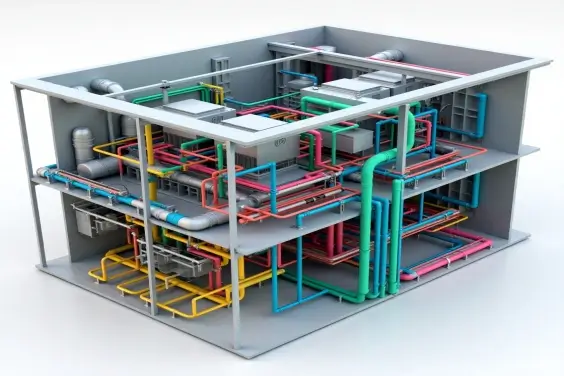
Complete HVAC BIM Modeling for Accurate and Efficient System Design
ASC Technology Solutions provides a service that converts 2D mechanical drawings, along with equipment submittals and design specifications, into smart three-dimensional mechanical models. Our team delivers accurate and compliant HVAC BIM services by ensuring adherence to both international guidelines and local codes. Our 3D models have an LOD value that spans from 100 to 500, allowing them to fulfill specific client requirements. Our company provides complete solutions to HVAC consultants and mechanical contractors by converting PDF, AutoCAD, or Point Cloud materials into final detailed and coordinated three-dimensional models. The use of BIM models at our company follows both project BIM standards and design specifications to ensure consistent and high-quality results. The HVAC models directly integrate into architectural, structural, electrical, and plumbing models to enable early detection of clashes before resolution steps are taken.
End-to-End BIM-Integrated HVAC Solutions for Seamless Project Execution
Our team at ASC Technology Solutions comprehends the complete spectrum of HVAC processes, including thermodynamic and fluid mechanical functions, along with heat transfer methodologies. HVAC projects at our firm are designed by professional engineers with an emphasis on efficiency, which is integrated with BIM to build foundation-grade heating, ventilation, and air conditioning systems. Our company supports clients throughout every phase of project development, from initial 2D sketches to producing detailed 3D models. BIM-driven coordination reveals potential accessibility problems and clashes, ensuring fewer errors and rework situations. With advanced technology and unparalleled expertise, we create HVAC solutions that improve project workflows by decreasing delays and enhancing accuracy. Contact us today to experience custom HVAC BIM solutions tailored to your operational and financial requirements.
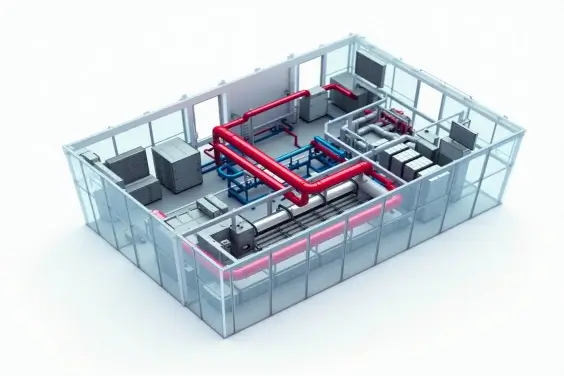
Accurate & Efficient HVAC BIM Modeling for Smarter Buildings
ASC's HVAC BIM Services: Smarter HVAC Engineering with Advanced BIM Coordination
Comprehensive MEP BIM services for contractors
2D to 3D Conversion
Our company delivers accurate 3D mechanical frameworks to HVAC contractors, consultants, and construction firms, which leads to improved product design, better details, and quicker fabrication processes. Detailed models from our company optimise MEP system installation, resulting in faster project execution times.
HVAC Duct Shop Drawings
The generation of conflict-free models allows us to produce accurate HVAC duct shop drawings that support smooth fabrication and installation processes. The complex documentation provided by us gives contractors and fabricators confident access to precise execution information.
Constructability Reviews
Timely recognition of design problems prevents costly modifications. Our experts conduct HVAC design reviews to identify issues like component clashes, accessibility, and consistency problems. We generate RFIs with proactive solutions to enhance construction workflow efficiency.
Quantity Takeoff
Material estimation needs to be precise for project budgeting and procurement planning purposes. We assist consultants in preparing BOQs for tendering and help contractors determine accurate material quantities, ensuring cost-effective project execution.
Benefits of outsourcing HVAC BIM Services
Commitment to Excellence in HVAC BIM Services
- The execution of building projects becomes smoother through HVAC BIM service outsourcing because designers achieve minimal design mistakes and reduce repetitive work. Through precise 3D modeling, projects achieve smooth integration of all systems between architectural structures, structural elements, and MEP technology, which eliminates time-delaying system conflicts and saves substantial expenses. Through professional BIM solutions, companies can enhance simultaneous team efforts while developing optimised operations and maximising total project output.
- Organisations benefit substantially from cost savings because outsourcing enables them to eliminate the need for maintaining internal BIM teams while reducing expenses related to BIM software. Companies that perform accurate quantity takeoffs alongside optimised resource management can improve their financial control while lowering material usage. Project duration shortens when BIM implementation is efficient, resulting in higher profitability and a competitive advantage.
- Organisations have access to subject matter experts who produce high-quality HVAC models that meet industry regulations and project requirements. High-level experts deliver detailed documentation and perform constructability analysis along with clash detection assistance for client decisions throughout the process. Better coordination occurs between contractors, consultants, and stakeholders because of this outcome.
- Project outsourcing remains the best choice because it accommodates flexible approaches that work for assignments ranging from small to complex. BIM services adapt their strategies to match any project scale, from small commercial constructions to extensive infrastructure projects. Business operations remain unaffected as BIM specialists provide continuous assistance that enables project execution without interruptions.
Why Choose Us for Your HVAC BIM Services
Subject Matter Expertise
Our team is well-versed in what they do. They are conversant with the local codal provision and understand industry-specific standards.
Working In Your Timezone
Often we see our clients want to be connected to the team they are working with for better and quick communication. Hence we work on your timezone.
Competitive Pricing
We offer competitive pricing starting from $16 per hour depending on the project scale, resource type and scope of the projects
Robust IT Infrastructure
Data-secured FTP, licensed and the latest version of hardware and software toolset ensures error-free designing, modeling, and overall project execution process, diminishing technical glitches.
Training & Development
Arrangement of multiple training and development programs for our engineers to upgrade their software skills and update with the latest technology ensures a premium client experience.
Policy
Contract agreements before project kick-off and standard guidelines eliminate miscommunication and ensure a constructive approach toward business relationships.
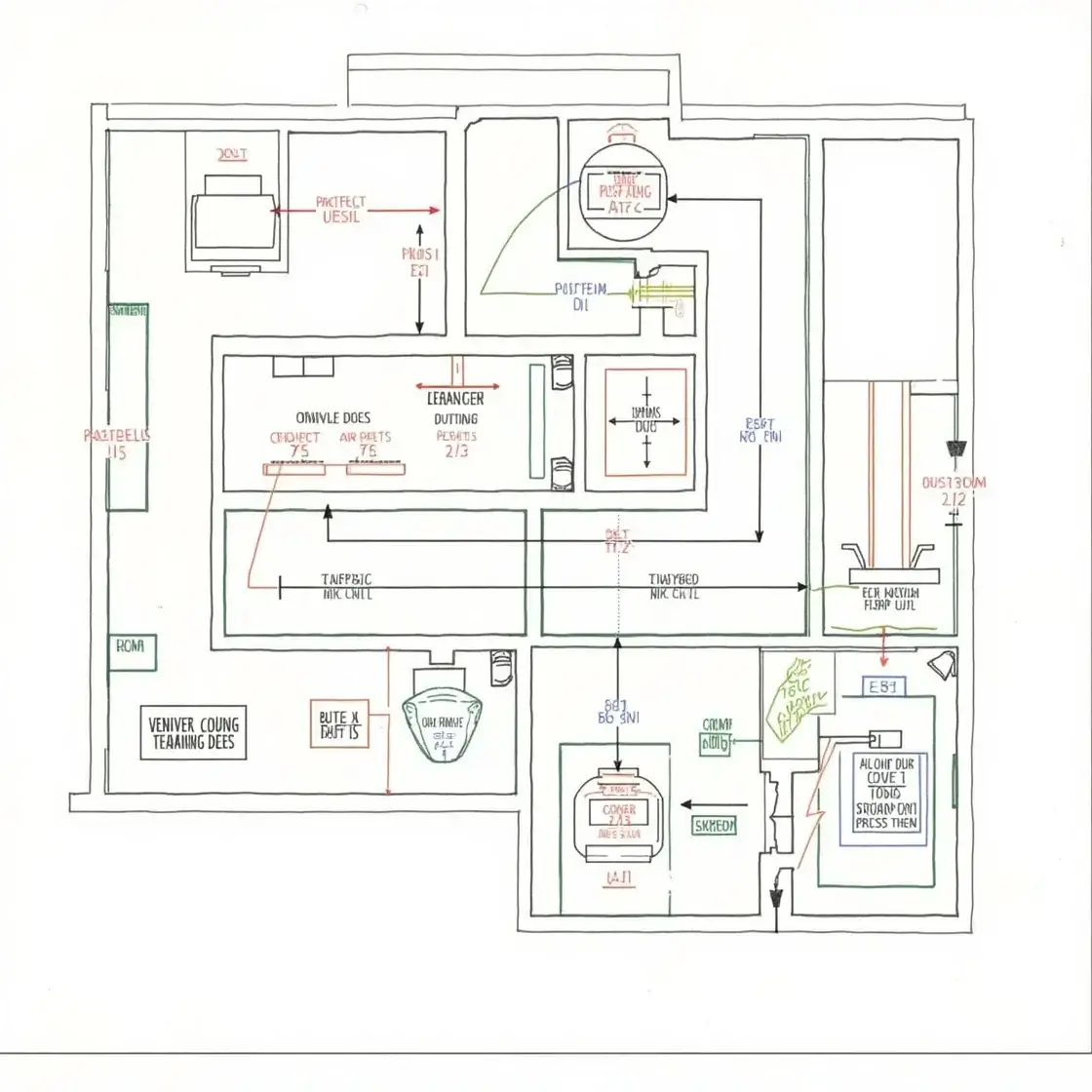


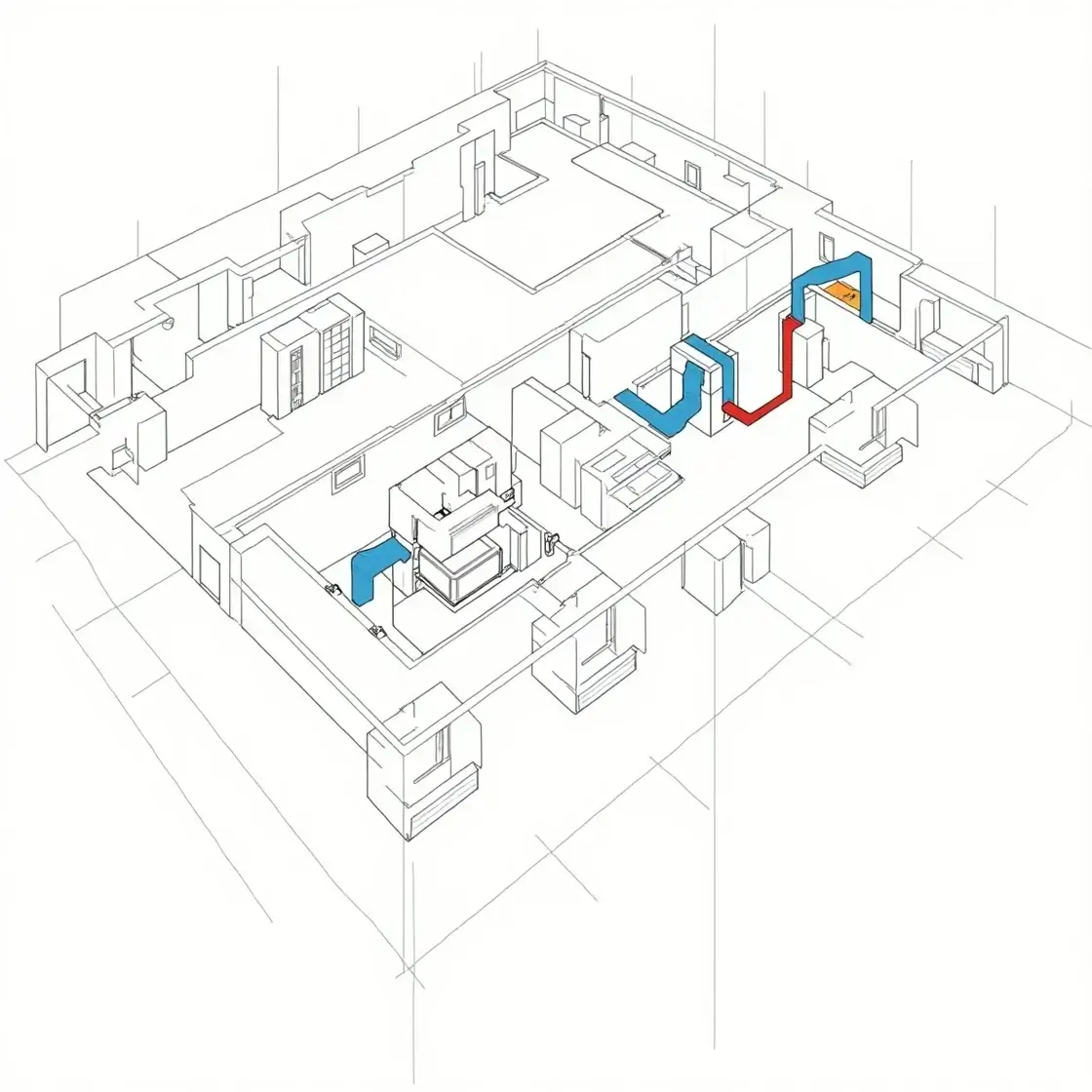
Sample Drawings
- All
- Architectural
- Mechanical
- Plumbing


Our Projects
Frequently Asked Questions
What is HVAC BIM, and how does it benefit MEP engineering?
The digital format of heating, ventilation and air conditioning systems inside buildings is classified as HVAC BIM (Building Information Modeling). BIM benefits the MEP sector of construction by creating exact system designs that enhance multi-disciplinary coordination and cut down errors while workers build the project. HVAC BIM improves overall efficiency and minimises construction errors because it provides real-time collaboration tools alongside data-intensive models that ensure effective system performance.
How does BIM improve HVAC system design and coordination?
BIM optimises HVAC system development through an integrated 3D model that connects mechanical structures with electrical, plumbing and structural structures. The engineering team can view layout possibilities while simultaneously spotting abnormal component interactions before achieving optimal ventilation system functionality and power efficiency. The digital data model supports direct communication between architects, contractors, and engineers, which results in effective coordinated execution of whole projects.
What are the key components included in an HVAC BIM model?
A complete HVAC BIM model incorporates all necessary components like ductwork, air handling units (AHUs), chillers, cooling towers, diffusers, exhaust systems, piping and various other mechanical equipment. The model includes detailed insulation specifications as well as airflow simulation and system routing for optimal energy performance alongside simplified maintenance procedures.
How does HVAC BIM help in clash detection and conflict resolution?
HVAC BIM models enable users to detect potential conflicts because they show the alignment of HVAC elements with electrical conduits, plumbing pipes and structural framework. Engineers employ BIM software to discover and address construction conflicts in their digital models prior to construction start, which eliminates costly repairs and leads to uncomplicated installation workflows.
How does HVAC BIM contribute to sustainable building design?
Sustainable building designs attain better energy performance and reduce material waste through HVAC BIM because it helps create efficient planning of systems and improves airflow distribution. Through BIM software engineers can examine energy usage, add green building technologies and meet LEED sustainability requirements (Leadership in Energy and Environmental Design). The development of environmentally friendly HVAC systems benefits significantly from BIM because the technology enhances both efficiency and resource reduction.

Leading BIM services provider. Adding Innovation and Excellence to the BIM Services.